
Stop Paying for What You Already Own.
Reposition your assets, restructure your financial framework, and move from borrower status to strategic ownership.
Most people spend decades paying interest on assets they believe they already own. Mortgages, vehicle notes, and personal loans quietly shift control toward institutions while individuals remain tied to repayment structures.
Trusted Solutions Now helps clients understand the structure behind these obligations and explore strategies designed to reposition assets with greater control, protection, and long-term ownership clarity.
Stop Paying for What You Already Own.
Reposition your assets, restructure your financial framework, and move from borrower status to strategic ownership.

Most people spend decades paying interest on assets they believe they already own. Mortgages, vehicle notes, and personal loans quietly shift control toward institutions while individuals remain tied to repayment structures.
Trusted Solutions Now helps clients understand the structure behind these obligations and explore strategies designed to reposition assets with greater control, protection, and long-term ownership clarity.
Ownership Is Not Just Possession.It is a position.
Financial systems are structured through contracts, titles, and liens that determine who ultimately holds authority over an asset.

When individuals enter into mortgage agreements, vehicle financing contracts, or personal loan arrangements, they often focus only on repayment terms. Yet behind those terms are layers of documentation and contractual positioning that shape the true structure of ownership.
Titles, liens, and financial agreements can quietly place institutions above the individual within the ownership hierarchy.
Understanding that structure is the first step toward changing it.
Trusted Solutions Now assists clients in evaluating how their assets are currently positioned and exploring strategies designed to strengthen long-term control over equity and ownership.
A Structured Framework for Asset Control
Our methodology focuses on reviewing, repositioning, and protecting assets through
strategic trust frameworks and administrative processes.
Rather than approaching financial issues as isolated problems, Trusted Solutions Now operates through a
structured model designed to address the areas where individuals most commonly lose control of their equity.
Our strategy centers around four core areas of asset positioning.

Mortgage Strategy
Property ownership often carries long-term financial obligations that can extend for decades. We evaluate how property titles, liens, and equity structures are currently positioned and explore ways to strengthen ownership clarity.

Vehicle Equity Positioning
Vehicle financing agreements frequently prioritize interest accumulation over efficient ownership. Our process includes reviewing these structures and identifying ways assets may be more strategically positioned.

Loan Structure Review
Student loans and personal financing agreements often operate within complex contractual frameworks. We assist clients in reviewing these structures and understanding their broader financial implications.

Private Trust Structuring
Trust frameworks create a foundation for long-term asset protection. Through strategic trust positioning, individuals can establish stronger privacy, protection, and generational planning for their assets.

Financial Systems Are Built on Contracts.Contracts Can Be Structured.
Understanding the administrative and legal framework behind financial instruments allows individuals to approach ownership strategically.
Every financial obligation exists within a defined structure of contracts, documentation, and administrative processes. Most individuals only interact with the repayment side of those agreements, never examining the framework that governs them.
Trusted Solutions Now focuses on helping clients understand how these structures operate and how assets can be repositioned through strategic documentation, administrative processes, and trust-based planning.
When the structure changes, the position of ownership can change with it.
Ownership Is Not Just Possession.It is a position.
Financial systems are structured through contracts, titles, and liens that determine who ultimately holds authority over an asset.
When individuals enter into mortgage agreements, vehicle financing contracts, or personal loan arrangements, they often focus only on repayment terms. Yet behind those terms are layers of documentation and contractual positioning that shape the true structure of ownership.
Titles, liens, and financial agreements can quietly place institutions above the individual within the ownership hierarchy.
Understanding that structure is the first step toward changing it.
Trusted Solutions Now assists clients in evaluating how their assets are currently positioned and exploring strategies designed to strengthen long-term control over equity and ownership.
A Structured Framework for Asset Control
Our methodology focuses on reviewing, repositioning, and protecting assets through strategic trust frameworks and administrative processes.
Rather than approaching financial issues as isolated problems, Trusted Solutions Now operates through a structured model designed to address the areas where individuals most commonly lose control
of their equity.
Our strategy centers around four core areas of asset positioning.
Mortgage Strategy
Property ownership often carries long-term financial obligations that can extend for decades. We evaluate how property titles, liens, and equity structures are currently positioned and explore ways to strengthen ownership clarity.
Vehicle Equity Positioning
Vehicle financing agreements frequently prioritize interest accumulation over efficient ownership. Our process includes reviewing these structures and identifying ways assets may be more strategically positioned.
Loan Structure Review
Student loans and personal financing agreements often operate within complex contractual frameworks. We assist clients in reviewing these structures and understanding their broader financial implications.
Private Trust Structuring
Trust frameworks create a foundation for long-term asset protection. Through strategic trust positioning, individuals can establish stronger privacy, protection, and generational planning for their assets.
Financial
Systems Are Built on Contracts.Contracts Can Be Structured.
Understanding the administrative and legal framework behind financial instruments allows individuals to approach ownership strategically.
Every financial obligation exists within a defined structure of contracts, documentation, and administrative processes. Most individuals only interact with the repayment side of those agreements, never examining the framework that governs them.
Trusted Solutions Now focuses on helping clients understand how these structures operate and how assets can be repositioned through strategic documentation, administrative processes, and trust-based planning.
When the structure changes, the position of ownership can change with it.
A Clear Path Toward Strategic Ownership
Our process is designed to provide clarity, structure, and long-term financial positioning.
Every engagement with Trusted Solutions Now follows a structured process designed to evaluate each client's financial landscape and develop a tailored strategy.
Structural Review
We begin by analyzing the obligations, titles, and contractual relationships surrounding your assets to understand how they are currently positioned.
Strategic Planning
Based on this analysis, we design a customized framework aligning documentation strategies, trust structuring, and administrative processes with your long-term objectives.
Implementation Guidance
Our team guides you through the documentation and structural adjustments required to reposition your assets effectively.
Long-Term Protection
Once assets are strategically structured, trust frameworks help support privacy, protection, and long-term generational planning.
A Clear Path Toward Strategic Ownership
Our process is designed to provide clarity, structure, and long-term financial positioning.
Every engagement with Trusted Solutions Now follows a structured process designed to evaluate each client's financial landscape and develop a tailored strategy.

Structural Review
We begin by analyzing the obligations, titles, and contractual relationships surrounding your assets to understand how they are currently positioned.
Strategic Planning
Based on this analysis, we design a customized framework aligning documentation strategies, trust structuring, and administrative processes with your long-term objectives.
Implementation Guidance
Our team guides you through the documentation and structural adjustments required to reposition your assets effectively.
Long-Term Protection
Once assets are strategically structured, trust frameworks help support privacy, protection, and long-term generational planning.
Two Very Different Ways to Hold an Asset
The difference between traditional ownership and strategic positioning lies in how assets
are structured within the financial system.
Traditional Structure
Long-term interest obligations
Assets held personally
Limited privacy
Reactive financial decisions
Strategic Ownership
Intentional equity positioning
Assets positioned through structured frameworks
Enhanced asset protection
Proactive long-term strategy
Ownership is not only about what you possess.
It is about how those assets are positioned within the systems that govern them.
Your First Step Toward Financial Sovereignty
Every strategic transformation begins with understanding
your current financial structure.
Before any strategy is implemented, we conduct a structured evaluation designed to assess how your assets, obligations, and ownership frameworks are currently positioned.

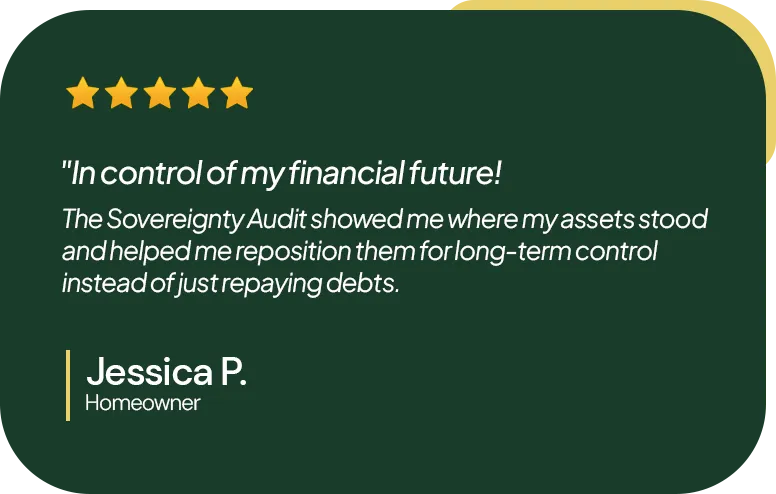
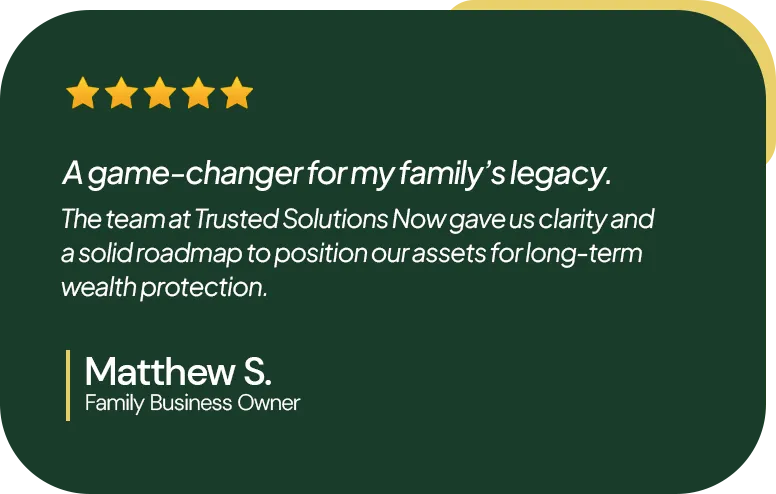
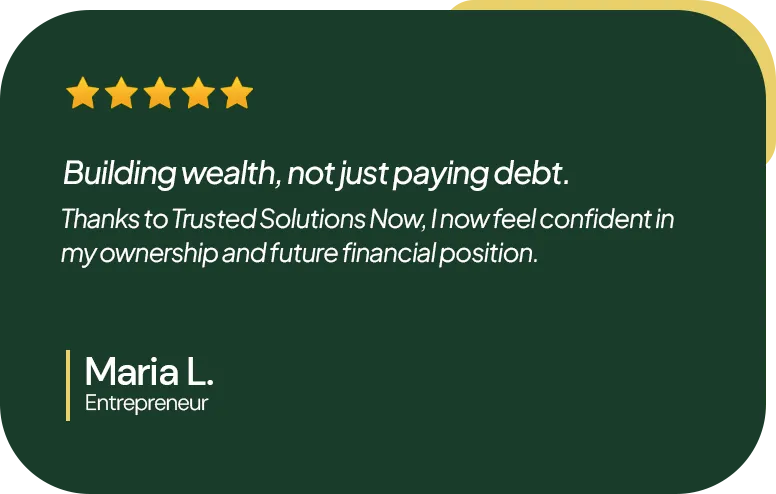
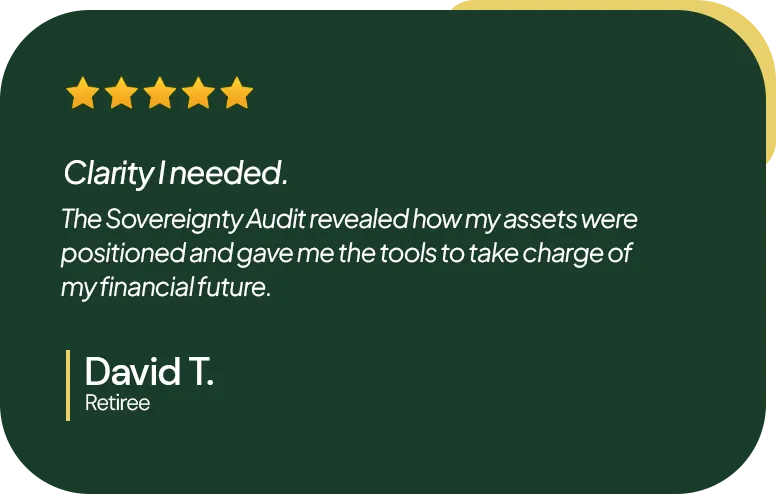
What Our Clients Say
During the Sovereignty Audit, our team reviews:
The estimated value of obligations tied to your assets
Your current exposure to interest-bearing liabilities
Which assets may benefit from structural repositioning
Whether trust-based frameworks align with your long-term financial goals
This process helps determine whether our strategy is appropriate for your situation and how a tailored plan may be developed.
Two Very Different Ways to Hold an Asset
The difference between traditional ownership and strategic positioning lies in how assets are structured within the financial system.
Traditional Structure
Long-term interest obligations
Assets held personally
Limited privacy
Reactive financial decisions
Strategic Ownership
Intentional equity positioning
Assets positioned through structured frameworks
Enhanced asset protection
Proactive long-term strategy
Ownership is not only about what
you possess.
It is about how those assets are positioned within the systems that govern them.
Your First Step Toward Financial Sovereignty
Every strategic transformation begins with understanding your current
financial structure.
Before any strategy is implemented, we conduct a structured evaluation designed to assess how your assets, obligations, and ownership frameworks are currently positioned.
What Our
Clients Say
During the Sovereignty Audit, our team reviews:
The estimated value of obligations tied to your assets
Your current exposure to interest-bearing liabilities
Which assets may benefit from structural repositioning
Whether trust-based frameworks align with your long-term financial goals
This process helps determine whether our strategy is appropriate for your situation and how a tailored plan may be developed.
Frequently Asked Questions
How is this not fraud?
This is circulating economy. Allowing people from the same pool to partake in investments.
How long does the process take?
30 to 90 days.Enforcement comes with state regulators.
What is the typical timeline of completion?
90 days or less.
What information and paperwork do I need to start?
Your Latest statement showing the amount owed.
Will my bank account be affected?
No.
If I am headed towards foreclosure, does it stop it?
Most definitely.
What If I just recently purchased the home, am I still able to qualify?
This is the perfect time.
What if I refinanced the home, do I still qualify?
Yes.
What if it’s an investment property do, I still qualify?
Yes.
What if there are multiple people on the deed, do I still qualify?
Yes.
Do I get money if I was in foreclosure and they have surplus funds?
Most definitely.
Is there any scenario where I would owe them money in the end?
No. People never owe the bank money.
Can this come back on me and I owe more money?
No.
Can I still maintain my relationship with the bank after this?
Depending on the lender.
Would I be able to get another mortgage after this, and do the same process?
Yes.
What specific statute allows this?
12 CFR 32.2 & more.
Has this strategy been upheld in court?
Yes. (Their are court cases that back these strategies)
Has anyone ever gone to jail for this method?
No.
Why don’t banks shut this down if it’s real?
It's not to their best interest. Only a few employees know about this.
Is this recognized by federal courts?
Yes.
Is this considered a sovereign citizen strategy?
No. This is recognized under RESPA and TILA.
Are you a licensed attorney?
No.
Are you providing legal advice?
No. We give Awareness & Enforce your rights.
Can this trigger foreclosure?
No
Can I lose my home?
Yes.
Can the lender sue me?
No
Can criminal charges be brought?
No
Could this be considered wire fraud or mortgage fraud?
On their part - yes. Not on yours. That is why we win.
Will this void my title insurance?
No
What exact paperwork is filed?
Notice of Intent
What happens during foreclosure while this is pending?
It's stopped. They can not proceed with the foreclosure.
Do I continue making payments?
No. No more payments once the process starts. It’s imperative to follow direction through and through.
Is there an escrow component?
No
Are there recorded court victories?
Never gone to court.
Is there a refund policy?
No refunds once process begins
Frequently Asked Questions
How is this not fraud?
This is circulating economy. Allowing people from the same pool to partake in investments.
How long does the process take?
30 to 90 days.Enforcement comes with state regulators.
What is the typical timeline of completion?
90 days or less.
What information and paperwork do I need to start?
Your Latest statement showing the amount owed.
Will my bank account be affected?
No.
If I am headed towards foreclosure, does it stop it?
Most definitely.
What If I just recently purchased the home, am I still able to qualify?
This is the perfect time.
What if I refinanced the home, do I still qualify?
Yes.
What if it’s an investment property do, I still qualify?
Yes.
What if there are multiple people on the deed, do I still qualify?
Yes.
Do I get money if I was in foreclosure and they have surplus funds?
Most definitely.
Is there any scenario where I would owe them money in the end?
No. People never owe the bank money.
Can this come back on me and I owe more money?
No.
Can I still maintain my relationship with the bank after this?
Depending on the lender.
Would I be able to get another mortgage after this, and do the same process?
Yes.
What specific statute allows this?
12 CFR 32.2 & more.
Has this strategy been upheld in court?
Yes. (Their are court cases that back these strategies)
Has anyone ever gone to jail for this method?
No.
Why don’t banks shut this down if it’s real?
It's not to their best interest. Only a few employees know about this.
Is this recognized by federal courts?
Yes.
Is this considered a sovereign citizen strategy?
No. This is recognized under RESPA and TILA.
Are you a licensed attorney?
No.
Are you providing legal advice?
No. We give Awareness & Enforce your rights.
Can this trigger foreclosure?
No
Can I lose my home?
Yes.
Can the lender sue me?
No
Can criminal charges be brought?
No
Could this be considered wire fraud or mortgage fraud?
On their part - yes. Not on yours. That is why we win.
Will this void my title insurance?
No
What exact paperwork is filed?
Notice of Intent
What happens during foreclosure while this is pending?
It's stopped. They can not proceed with the foreclosure.
Do I continue making payments?
No. No more payments once the process starts. It’s imperative to follow direction through and through.
Is there an escrow component?
No
Are there recorded court victories?
Never gone to court.
Is there a refund policy?
No refunds once process begins
TRUSTED SOLUTIONS NOW
LEGAL